Low-maintenance garden ideas that suit Melbourne.
Low maintenance never means no maintenance. Here’s what actually cuts the work in a Melbourne garden, and what each idea still asks of you.
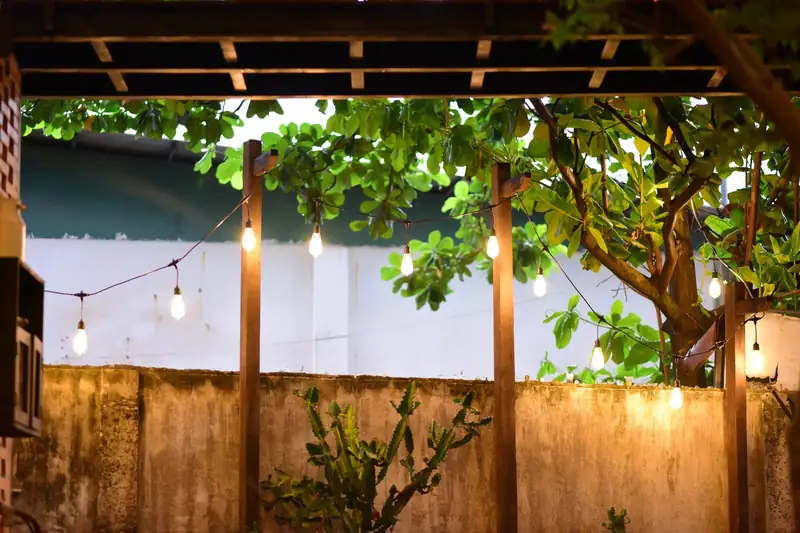
The short answer: the easiest Melbourne gardens have no bare soil, plants that suit the spot, a lawn that’s smaller or easier to look after, and watering on a timer. Each idea removes a job instead of hiding it. None of them makes a garden maintenance-free, so plan for a little regular care.
Here’s what works, and what each idea still asks of you.

Start with where your weekends go
Before you change anything, list the jobs that take your time: mowing, weeding, pruning, raking leaves or dragging a hose around. Fix the biggest one first. A garden that’s mostly lawn needs a different answer from one that’s mostly weeds.
Then think about how you use the space. Room for kids to run, a dog area, somewhere to eat outside or just something tidy to look at from the kitchen. That decides how much lawn, paving and planting you need, whether you do the work yourself or have it done through our landscaping service.
Cover bare soil with mulch or pebbles
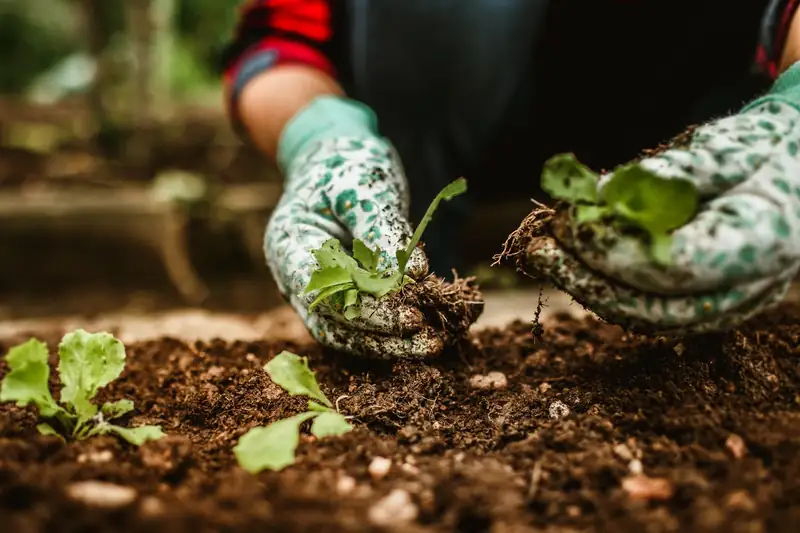
Bare soil sprouts weeds and dries out fast, so covering it is the quickest way to cut work.
To choose one, read our guide to the best mulch for Melbourne gardens, then work out how much mulch you need. Or have it done with our mulch installation across Melbourne.
Prefer to talk? Call or text 0415 386 399. We reply within 12 business hours.
Choose plants that suit Melbourne conditions
Plants that suit your soil, sun and rainfall need less water, less feeding and fewer replacements. Local indigenous plants are the safest bet because they evolved here. Many councils publish a list. Hume’s Gardens for Wildlife list, for example, gives each plant’s height and width and notes the conditions it suits, such as wet or dry ground. A local indigenous nursery can also help.
Three habits help any planting:
Make the lawn smaller, easier or artificial
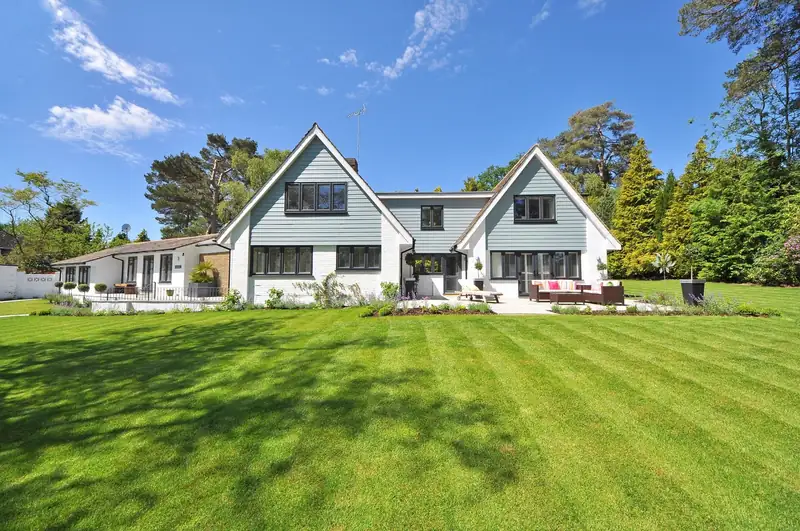
The lawn is often the biggest weekly job. There are three ways to cut it back:
Water less, but smarter
Victoria’s permanent water saving rules apply every day of the year to drinking water from the mains (not rainwater or greywater). Watering systems, even a sprinkler on a tap, can only run between 6 pm and 10 am. A hand-held hose with a trigger nozzle, a watering can or a bucket can be used any time.
That makes drippers or a soaker hose on a timer the easiest set-up. It runs overnight inside the rules, puts water at the roots and doesn’t need you there. Darebin’s booklet says micro-sprays can lose up to 70% of their water to drift and evaporation. Mulch on top keeps the moisture in.
Paths and hard surfaces that don’t make more work
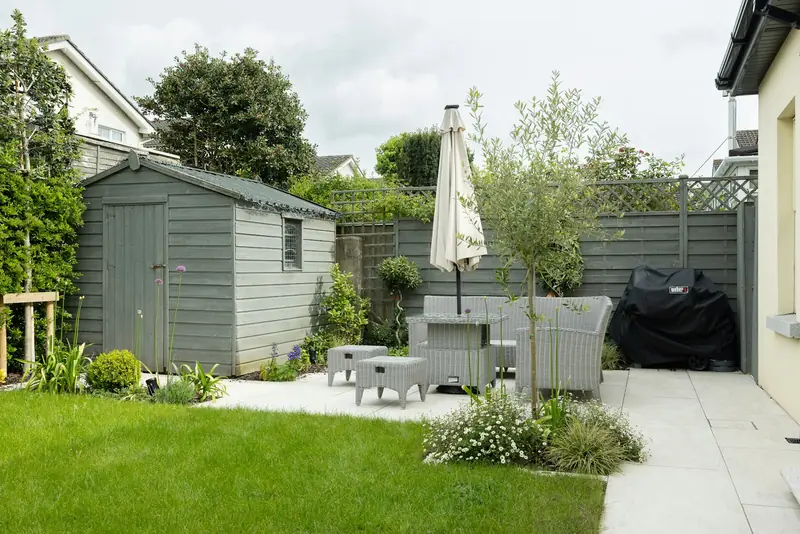
Paving and gravel cut mowing and weeding, but only if they’re built well. Gravel needs a firm, compacted base and a solid edge, or it creeps into beds and weeds push through.
Plan to sweep, not hose. The water rules say drinking water must not be used to clean paths, driveways and other hard surfaces, apart from dealing with a hazard, staining or construction. A broom or blower is the low-maintenance tool.
If you live in a bushfire-prone area, CFA’s landscaping guide suggests paving and gravel around the house, keeping plants away from windows and doors.
What still needs doing, and how often
| Feature | What it still needs | How often |
|---|---|---|
| Organic mulch | Topping up as it breaks down | Check once a year |
| Pebbles or gravel | Pulling weed seedlings, raking level | When weeds appear |
| Natural lawn | Mowing, edges and the odd feed | See how often to mow |
| Artificial grass | Leaves off, brushing, rinsing pet spots | Weekly, plus a deeper clean every few months |
| Hedges | Trimming | Autumn and spring |
| Established indigenous plants | Watering in dry spells | Once or twice a week in summer |
The mulch timing comes from Darebin’s booklet, hedges from Gardening Australia, watering from Merri-bek’s indigenous gardening guide, and artificial grass from our artificial grass cleaning guide.
Getting it done
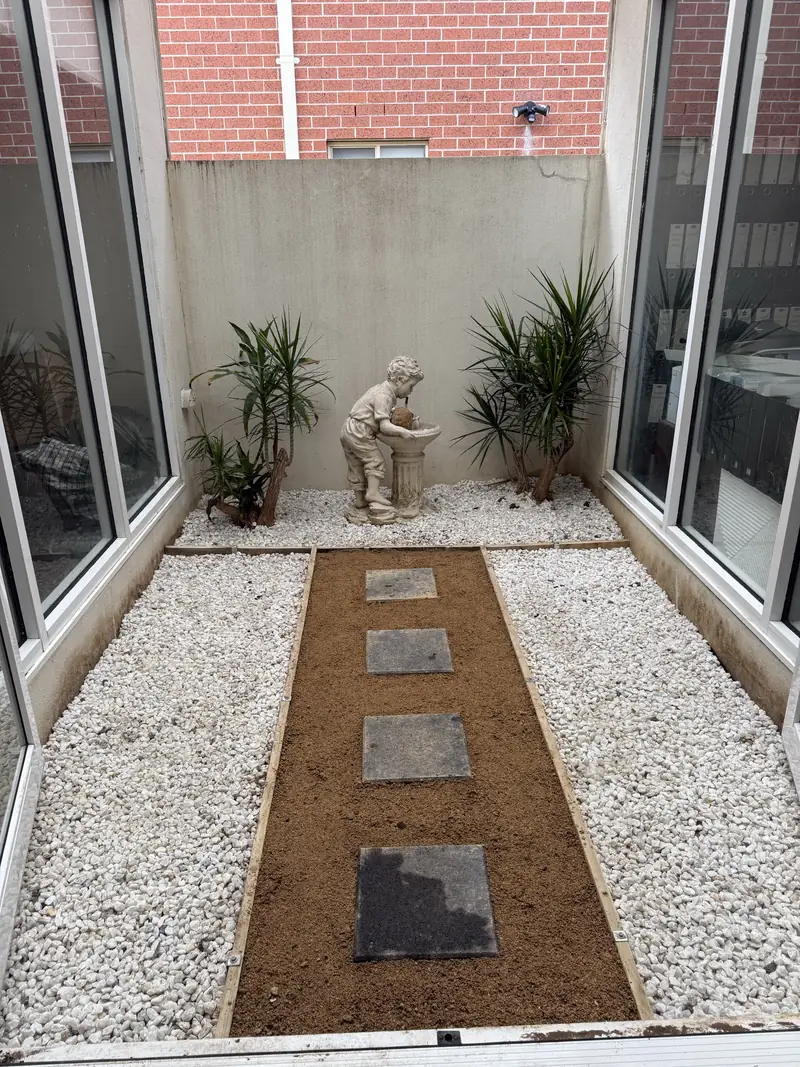
Most low-maintenance makeovers combine a few of these: clearing and weeding, new beds and edging, mulch or pebbles, and a new lawn or artificial grass. We do landscaping across Melbourne and mulch installation, and can keep things tidy afterwards with regular garden maintenance. See how a neglected courtyard got a clean path and gravel finish in our courtyard restoration project.
Typically, old lawn and soil removal is included in the quote whenever base preparation is needed, and a mid-size job takes 2 to 4 days. Text a few photos of the space and your suburb to 0415 386 399 for a free measure and quote.
From EKO Gardening Solutions. Sources checked on 9 October 2026.
Ready for a free measure and quote?
A few useful answers.
Have a question about your own space?
Tell us what you have in mind.
What's the lowest-maintenance garden for a Melbourne home?
One with no bare soil, plants that suit the spot, little lawn to mow and watering on a timer. Mulched beds of local plants, a gravel or paved area and a small lawn or artificial grass suit most homes. It still needs some regular care, such as weeding, topping up mulch and trimming.
Are pebbles lower maintenance than mulch?
Pebbles don’t break down, so they don’t need topping up. But Sustainable Gardening Australia warns that dust builds up between the stones and lets weed seeds sprout. Rock can also soak up too much heat and damage plants. Pebbles are also hard to clear out if you change your mind. Organic mulch needs topping up, but it improves the soil as it breaks down.
Is artificial grass really low maintenance?
It takes away mowing and watering, but it still needs leaves cleared, busy areas brushed and pet spots rinsed, plus a deeper clean every few months. Our comparison of artificial grass and natural lawn sets out the trade-offs honestly.
Which plants are easiest to look after in Melbourne?
Usually local indigenous plants, because they’ve adapted to the local soil and climate. Ask your council for its indigenous plant list or visit a local indigenous nursery, and check each plant’s size, sun and soil needs. Avoid anything your council lists as an environmental weed.
Sources
- Victorian Government: permanent water saving rules (page modified 13 Jan 2026; checked 9 Oct 2026)
- Sustainable Gardening Australia: choosing mulch for your garden (28 Sep 2017; checked 9 Oct 2026)
- Building and Plumbing Commission (Victoria): termites (modified 11 Aug 2026; checked 9 Oct 2026)
- Hume City Council: Gardens for Wildlife indigenous plant list (PDF, undated; checked 9 Oct 2026)
- City of Darebin and Sustainable Gardening Australia: Sustainable Gardening in Darebin (revised 2011, PDF; checked 9 Oct 2026)
- Merri-bek (then Moreland) City Council: Gardening with Indigenous Plants (revised 2005, PDF; checked 9 Oct 2026)
- Gardening Australia: Livin' on the Edge, garden bed edges and mowing strips (30 Oct 2020; checked 9 Oct 2026)
- Gardening Australia: Growing Hedges (aired 30 Jun 2007, updated Nov 2018; checked 9 Oct 2026)
- CFA: Suburban Garden Landscaping for Bushfire, garden design and plant selection (June 2022, PDF; checked 9 Oct 2026)
Keep reading.

Ready to make a start?
Tell us about your space.
We’ll help you work out the next step.