Common weeds in Melbourne, and how to get rid of them.

Most weeds come back because their roots, bulbs or seeds stay behind. Here’s how to recognise the usual suspects and deal with each one.

Updated 9 October 2026

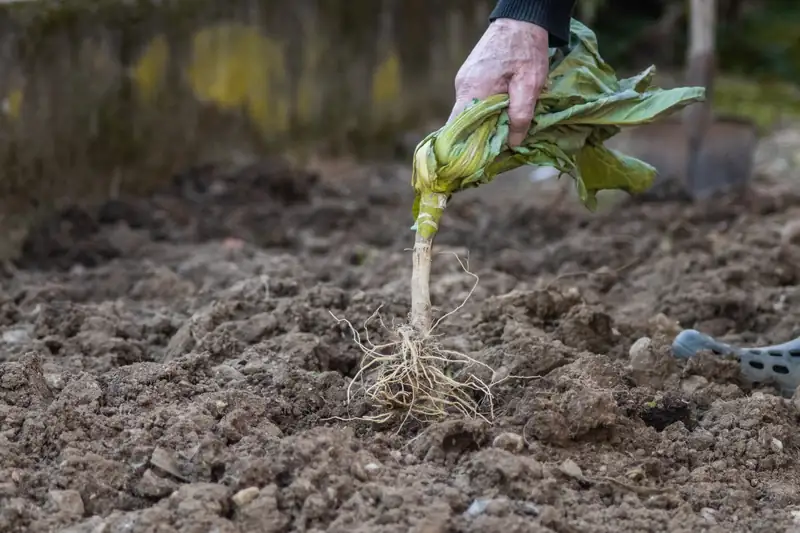
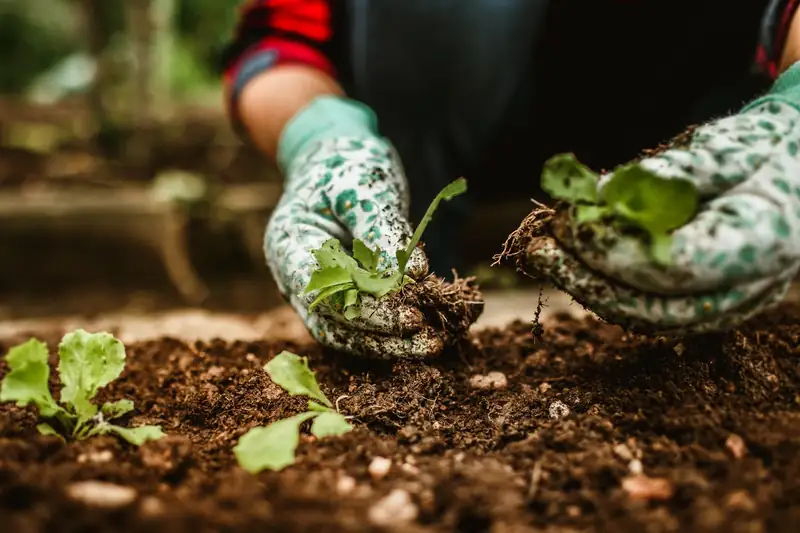
Pulling a weed out of the soil by hand (stock photo)

The short answer: name the weed first, because the fix depends on how it spreads. Tap-rooted weeds lift out with a forked weeder, bulb weeds need digging out with their soil, and running grasses need every root removed. Get them before they seed, bag the seed heads, and cover bare soil afterwards. Restricted weeds such as Chilean needle grass need extra care, so check with your council before you move soil or slashings.

Here are common weeds in Melbourne lawns and gardens, how to tell them apart, and what works. If you’d rather hand it over, see our weed removal across Melbourne.

Lawn weeds

Bindii

A low, flat annual lawn weed. Its seeds end in stiff spines, which are the prickles you feel underfoot. Gardening Australia says bindii is a cool-season weed that thrives where lawns are cut too low. So start in autumn and winter: raise the mower and feed the lawn so thick grass crowds it out. Gardening Australia’s rule for annual weeds is to get them out before they flower and set seed, so lift small patches early.
Capeweed

Yellow daisy flowers with a black or dark brown centre. It’s tap-rooted, so lift the whole plant with a forked weeder, which gardeners call a daisy grubber, before it flowers and seeds.

Flatweed and dandelion

Both have yellow flowers and a taproot. An archived Victorian Government plant key tells them apart. Flatweed (cat’s ear) has rough, hairy leaves and flower stems that usually branch. Dandelion’s stems don’t branch, and its leaves have deep lobes pointing back towards the centre. The fix is the same for both: lift the whole taproot with a daisy grubber.

Onion grass

A bulb weed: pull the leaves and the bulb stays in the ground. Gardening Australia’s advice for bulb weeds is to dig them up with their soil, then drown them in a bucket of water for 8 to 12 weeks. For a bigger patch in warm weather, it suggests covering the area with clear plastic, pinned at the edges, for at least 8 weeks. That kills the lawn underneath too.

Garden bed weeds

Oxalis (soursob)

Clover-like leaves made of three heart-shaped leaflets, often with purple-brown flecks, and bright yellow trumpet flowers from June to October. It grows from a bulb that makes many tiny bulbs, called bulbils. Weeds Australia warns that pulling it after the bulbils form knocks them loose and spreads them, so get it early or dig out the whole plant with its soil. It also travels in contaminated soil, pots and dumped garden waste.

Onion weed

Onion weed takes persistence. Gardening Australia explains why: its bulbs grow “one above the other”, so pulling the top one leaves the rest to sprout, and digging can spread them through the soil. For a small patch, it suggests smothering it with cardboard or old carpet for a few weeks or months.

Wandering trad

Glossy, succulent stems and leaves, with white flowers in summer. Every leaf node can root, and Yarra Ranges Council warns that even a tiny piece of stem will regrow. Roll thick mats up like a carpet with a rake, pick up every last piece, and keep it out of the compost. Expect follow-up over a few years. It’s also a common cause of skin rashes in pets.

Couch and kikuyu

Running grasses that creep from the lawn into the beds. Gardening Australia’s advice is to remove every bit of root, and Banyule City Council lists both among its environmental weeds. A firm edge between lawn and beds slows them down.

Prefer to talk? Call or text 0415 386 399. We reply within 12 business hours.

Garden plants your council may call weeds

Some weeds started out as garden plants. Banyule City Council’s environmental weeds brochure lists agapanthus, English ivy, cotoneasters, broad-leaf privet and wandering trad. Darebin’s nature strip “no plant” list includes agapanthus, English ivy and arum lily. Whittlesea counts blackberry among its priority weeds.

If you’re replacing them, ask your council for local alternatives. And never dump the cuttings in a park or reserve: Banyule’s brochure asks residents not to dump weeds or garden waste.

Declared weeds you must not spread

Victoria’s Catchment and Land Protection Act 1994 declares some plants noxious weeds, and the City of Whittlesea reminds landowners they’re legally obliged to manage them on their property. Two to know about, both on the weed lists of northern councils such as Whittlesea and Banyule:

  • Chilean needle grass. Agriculture Victoria lists it as restricted in every Victorian catchment. It’s a tussock grass up to about 1 metre tall. The best way to identify it is the seed: a small raised crown sits where the long, twice-bent awn meets the seed. The sharp seeds catch on clothing, animals and machinery.
  • Serrated tussock. Regionally controlled in the Port Phillip and Western Port catchments. Its very fine leaves roll easily between your fingers, and you can feel tiny serrations if you run a leaf from tip to base. The seed heads turn purple as they ripen in late spring and summer, and wind can carry them for kilometres.

For regionally controlled weeds, landowners must take all reasonable steps to stop them growing and spreading. The City of Whittlesea warns that slashing (especially in peak flowering season), dirty machinery and contaminated soil all help spread Chilean needle grass. If you think you have either weed, don’t mow or slash that patch while it’s flowering or seeding, and don’t move soil from it. Talk to your council or Agriculture Victoria first.

Pulling, digging or spraying?

Match the method to how the weed grows. These groups come from Gardening Australia:

Weed type Examples What works
Tap-rooted Capeweed, flatweed, dandelion Lift the whole root with a daisy grubber
Bulbs Oxalis, onion grass, nut grass Dig out with the soil; smother patches or cover them with clear plastic
Runners Couch, kikuyu Remove every piece of root

Two tips from Gardening Australia: weed after rain, when moist soil makes weeds easier to remove, and get annual weeds out before they flower and set seed. For dense patches, herbicides are sometimes the practical choice. Weeds Australia says so for oxalis, says to read the label first, and notes that training is normally required for some control methods. Any product must suit the weed and the situation, and be used exactly as its label says. Whatever the method, established weeds, runners and seed banks usually need follow-up.

Keeping weeds out

  • Mulch beds after weeding. Sustainable Gardening Australia says mulch, used correctly, suppresses weed growth. It doesn’t recommend plastic sheeting or landscape fabric. See the best mulch for Melbourne gardens, or let us do it with mulch installation.
  • Keep the lawn thick. Mowing a little higher helps against bindii. Bare patches invite weeds in, so see how to fix a patchy lawn.
  • Edge the beds so runners can’t creep in.
  • Don’t spread them. Keep wandering trad out of the home compost, and drown bulb weeds first. Most green bins take weeds; what can go in your green waste bin covers the rules by council.
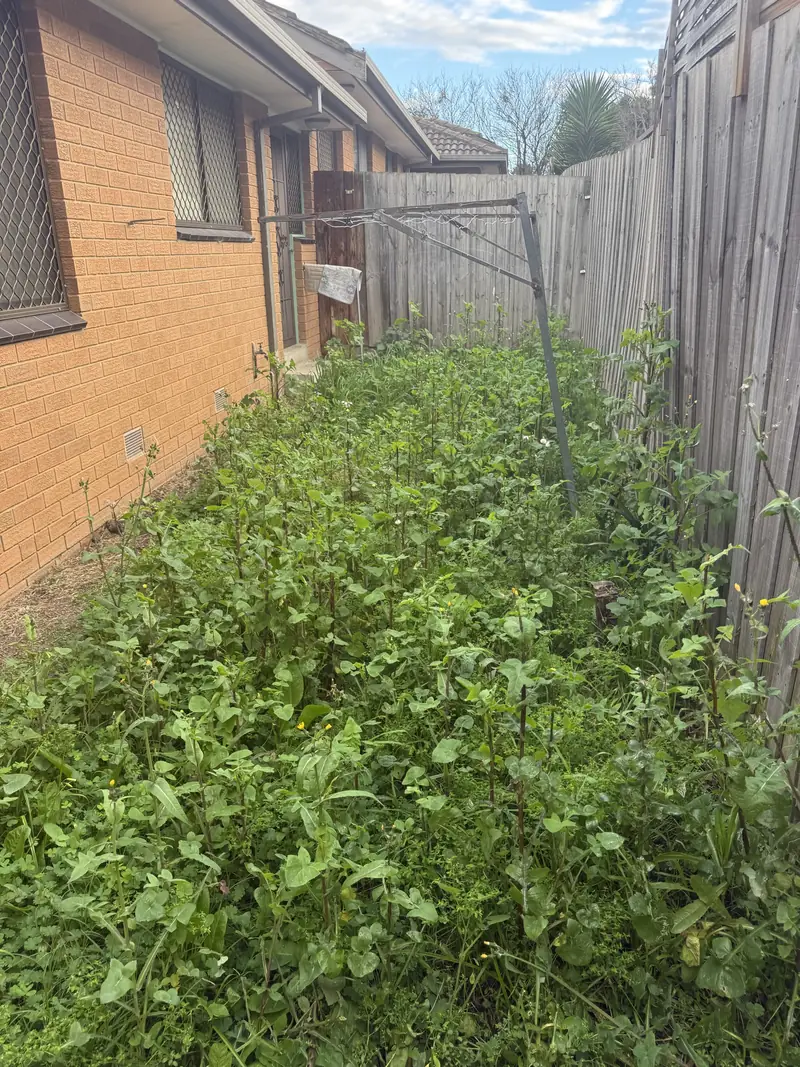
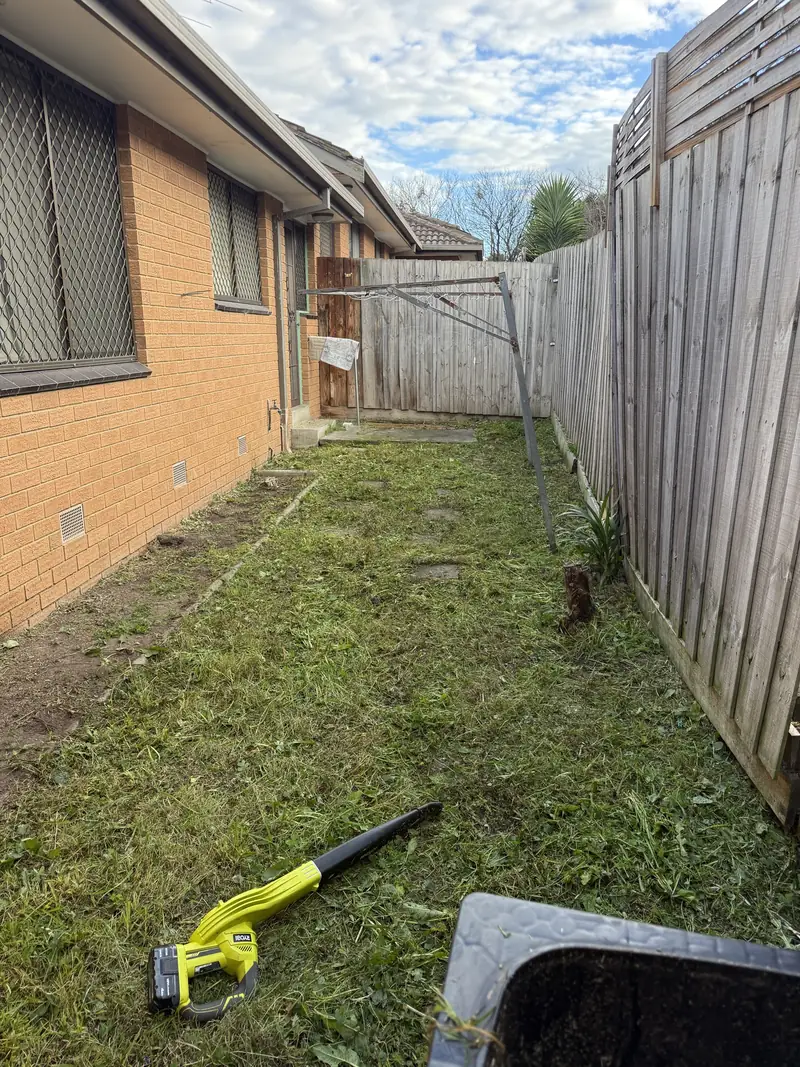
Side garden after overgrowth has been cleared

When to get help

Not sure what you’re looking at? Text a clear photo of the leaves and any flowers to 0415 386 399, and we’ll tell you what we think it is. We reply within 12 business hours.

Our weed removal service starts with a look at the weeds, the plants you want to keep and the finish you want. Then we agree on hand removal, targeted treatment where suitable, or a mix. We won’t promise a weed-free garden after one visit, because established weeds rarely work that way. If the whole yard has gone wild, start with how to clean up an overgrown garden or a garden cleanup.

From EKO Gardening Solutions. Sources checked on 8 and 9 October 2026.

A few useful answers.

Have a question about your own space?
Tell us what you have in mind.

How do I get rid of onion weed for good?

Expect it to take persistence. Its bulbs sit one above the other, so pulling the top one lets the rest sprout, and loose digging can spread them. For a small patch, smothering it under cardboard or old carpet for a few weeks or months can work, but it kills the grass too.

What's the weed with yellow flowers in my lawn?

Four common culprits: capeweed has yellow daisies with a dark centre. Flatweed has rough, hairy leaves and branching flower stems. Dandelion has unbranched stems and deeply lobed leaves. Oxalis (soursob) has clover-like leaves and yellow trumpet flowers from June to October.

Can I put weeds in my green bin?

Usually, yes. Moonee Valley, Hume and Darebin all list weeds as accepted in their green-lid bins. Put them in loose, without soil. For restricted weeds such as Chilean needle grass, ask your council how to dispose of them.

Will mulch stop weeds?

It slows them down. Sustainable Gardening Australia says mulch, used correctly, suppresses weed growth. It works best on clean soil, so get the weeds out first, roots and bulbs included.

Sources

  1. Agriculture Victoria (updated 10 September 2026): Chilean needle grass
  2. Agriculture Victoria (updated 10 September 2026): serrated tussock
  3. Agriculture Victoria (updated 10 September 2026): invasive plant classifications
  4. City of Whittlesea: weeds and pest plants
  5. City of Whittlesea: Chilean needle grass weed fact sheet (PDF; how it spreads)
  6. Banyule City Council: Banyule's environmental weeds (brochure, PDF, undated)
  7. Darebin Council: nature strip 'no plant' weed list (PDF)
  8. Gardening Australia (8 July 2022): Winter weeds (running, bulb and tap-rooted weeds)
  9. Gardening Australia (aired 9 May 2015, updated 27 September 2022): FAQs, gymea and bindii
  10. Royal Botanic Gardens Victoria, VicFlora (updated 11 February 2019): Soliva sessilis (bindii; annual lawn weed with spine-tipped seeds)
  11. Gardening Australia (2 November 2013): At war with weeds (annual weeds: remove before they flower and set seed)
  12. Gardening Australia (12 June 2026): Managing weeds (moist soil after rain makes weeding easier)
  13. Gardening Australia (October 2010): Ask it, solve it: onion weed
  14. Weeds Australia (updated January 2024): soursob profile
  15. Yarra Ranges Council: wandering trad
  16. Victorian Resources Online (State of Victoria, archived): key to yellow daisies
  17. Sustainable Gardening Australia (28 September 2017): choosing mulch for your garden
  18. Moonee Valley City Council (modified 1 September 2026): FOGO bin
  19. Hume City Council: what goes in each bin
  20. Darebin Council: food and green waste bins

Ready to make a start?

Tell us about your space.
We’ll help you work out the next step.