
How to clean up an overgrown garden.
Work in the right order and an overgrown garden comes back faster, with less waste and fewer surprises. Here’s an order that works.
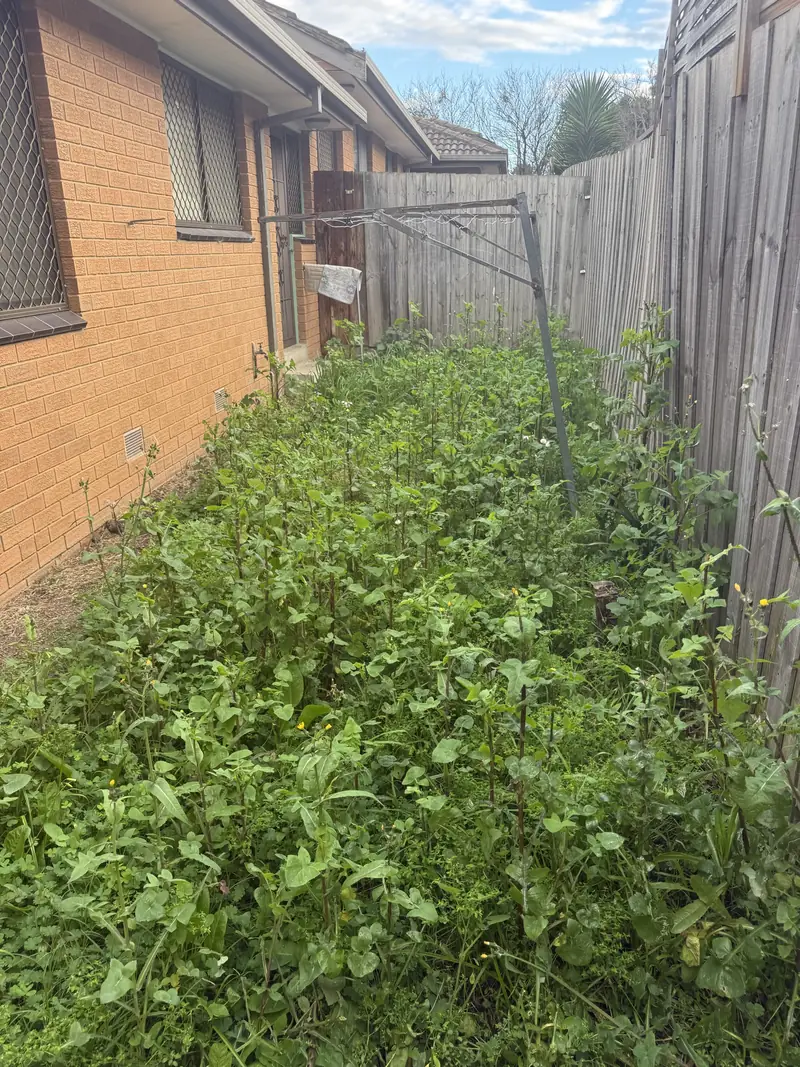
The short answer: check for hazards first: snakes, old fibro, sharp rubbish and power lines. Then work from big to small. Clear a path and the rubbish, cut back the tall growth, get the weeds out with their roots, prune what’s worth keeping, and sort the green waste. Finish by covering bare soil so the garden doesn’t slide straight back.
If the yard is big, work in zones. A finished side passage this weekend beats a half-done backyard. And if you’d rather hand the whole thing over, that’s what our one-off garden cleanups are for.
Before you start: safety checks
An overgrown garden hides things. Walk the whole area before you cut anything.
Step 1: Clear a path and the rubbish
Decide what stays before anything goes. Mark the plants, pavers and edging you want to keep with string or bright tape, so they don’t disappear under a trimmer.
Then clear a path and pull out the rubbish: old pots, timber, sheets of iron, toys and anything sharp. Lift it with a rake or shovel rather than your hands. The state’s snake fact sheet lists rubbish, wood piles and sheets of iron as places snakes take cover.
Sort as you go into general rubbish, recycling and garden waste. Give the garden waste its own spot near the gate or driveway, because in an overgrown garden that pile gets big fast.
Prefer to talk? Call or text 0415 386 399. We reply within 12 business hours.
Step 2: Cut back the tall stuff
Take tall grass and weeds down to about ankle height first. You’ll see the ground again, spot anything you missed, and be able to reach the roots. A line trimmer or brushcutter is quickest on big areas. Hand shears are safer near plants you’re keeping.
Cut from the top down, and take seed heads off before they drop. Bag them rather than leaving them on the ground.
Mind the time, too. Under EPA Victoria’s residential noise rules, mowers, other grass-cutting tools, chainsaws and electric power tools can’t be used before 7 am or after 8 pm on weekdays. On weekends and public holidays, the limits are before 9 am and after 8 pm.
Step 3: Get the weeds out properly
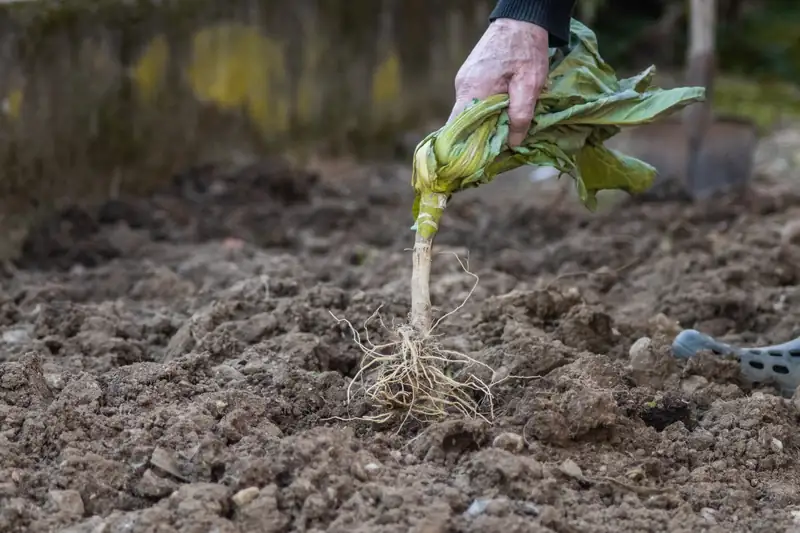
Weeds come back when their roots, bulbs or runners stay in the ground. Pull or dig them out whole, ideally after rain: Gardening Australia notes that moist soil makes weeds easier to remove. It groups the common ones like this:
- Tap-rooted weeds such as dandelion, flatweed and capeweed lift out with a forked hand weeder, which gardeners call a daisy grubber.
- Bulb weeds such as oxalis and onion grass need digging out with the soil around them. Gardening Australia suggests drowning them in a bucket of water for 8 to 12 weeks.
- Running grasses such as couch and kikuyu need every bit of root removed, so follow each runner out.
Watch for restricted weeds. Agriculture Victoria lists Chilean needle grass as a declared noxious weed, restricted in every Victorian catchment. Its sharp-pointed seeds catch on clothing, animals and machinery, and the City of Whittlesea lists slashing, especially in peak flowering season, as one way it spreads. So don’t slash or mow it while it’s flowering or seeding, and check with your council before you tackle it. Our guide to common weeds in Melbourne shows how to tell the usual suspects apart.
Step 4: Prune what’s worth keeping
With the weeds gone, you can see the plants properly. Start with anything dead, broken or rubbing, then shape what’s left. Step back often and check the shape from the house.
If you’re not sure how a plant copes with a hard cut, prune lightly now and look it up before you go further. Hedges have their own timing: see when to trim hedges in Melbourne.
Step 5: Sort the green waste
Councils generally take leaves, grass, prunings, small branches and weeds in the green-lid food and garden bin. The limits differ, though. Moonee Valley doesn’t take large branches or tree stumps and sets an 8 cm maximum branch diameter. Hume takes small branches up to 10 cm thick. Neither takes soil or plastic bags, and rocks and treated timber are generally out too, so put garden waste in loose.
When the bin isn’t enough:
- Spread it out over a few collections if it can wait.
- Book a council collection. Hume and Whittlesea both run bundled branch collections; tie the bundles with string or twine.
- Have it taken away. Our green waste removal service loads it and takes it away, on its own or as part of a cleanup.
Never dump it. EPA Victoria says dumping waste on land that isn’t licensed to accept it is illegal, and garden waste and soil are among the waste types it takes reports on. Our green bin guide compares the rules council by council.
Step 6: Stop it coming back
Bare soil won’t stay bare for long. Three things help:
When to call in help
Some cleanups are a weekend job. Others aren’t. It’s worth getting help when:
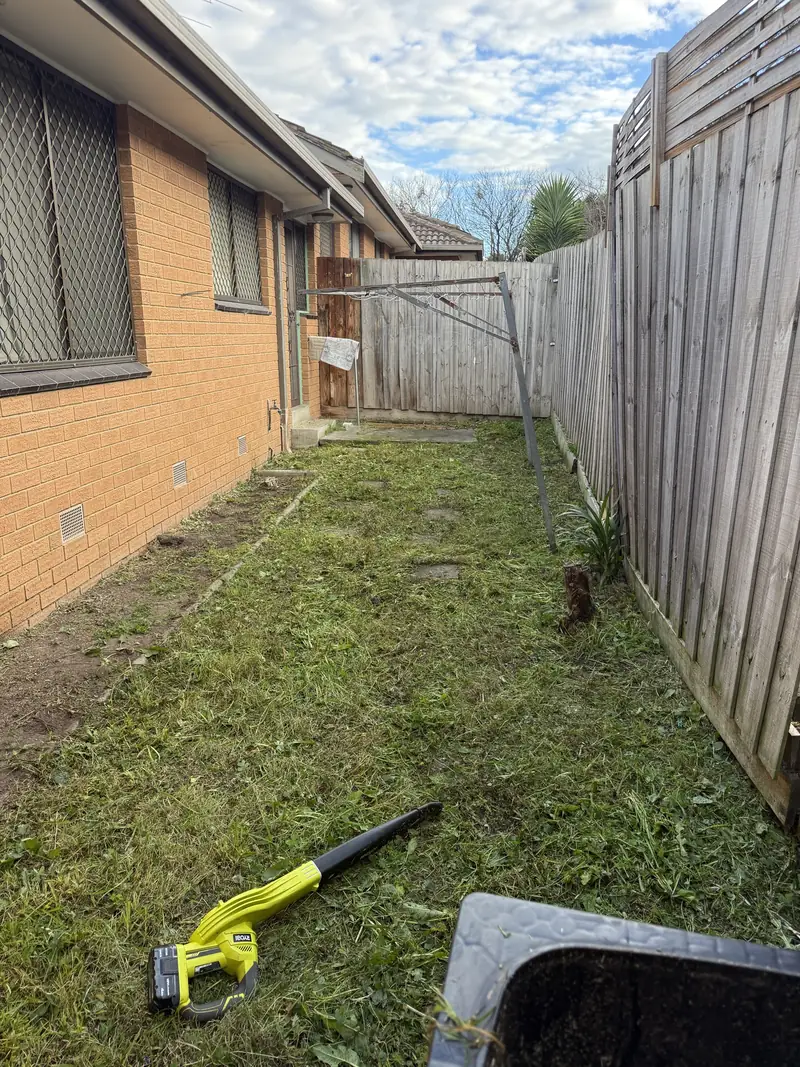
We do garden cleanups across Melbourne, from a one-off presentation tidy to a complete reset of an overgrown yard. The agreed green waste leaves with the job. See the before and after of a side garden we cleared.
The easiest first step: text a few wide photos of the whole area and your suburb to 0415 386 399. We reply within 12 business hours.
From EKO Gardening Solutions. Sources checked on 8 and 9 October 2026.
A few useful answers.
Have a question about your own space?
Tell us what you have in mind.
Should I cut back first or pull weeds first?
Cut back first. Taking tall growth down to about ankle height lets you see the ground, spot hazards and reach the weed roots. Then pull or dig the weeds out, roots and all, before they set seed.
What do I do with all the green waste?
Small loads can go in your green or FOGO bin, loose and with no soil, rocks or treated timber. For more, use your council’s booked branch or hard waste collection, or have it loaded and taken away. Limits differ by council.
Is it safe to clear an overgrown garden in snake season?
Take care. Snakes are most active in spring and summer, and long grass and rubbish piles give them shelter. Wear boots and long pants, lift rubbish with a tool, and never try to catch or move a snake: they’re protected in Victoria.
Do you do one-off cleanups?
Yes. We do one-off presentation cleanups and complete resets of overgrown gardens, with the agreed green waste taken away. Text a few wide photos and your suburb to 0415 386 399 and we’ll tell you what’s involved.
Sources
- Department of Environment, Land, Water and Planning (2021): Living with snakes fact sheet (PDF)
- Hume City Council: snake safety flyer (PDF)
- Victorian Government asbestos website: fact sheet for homeowners and tenants (PDF; homes built before 1990)
- Victorian Government asbestos website (updated 13 June 2024): do's and don'ts for working with asbestos
- Energy Safe Victoria (reviewed 16 March 2026): trees and vegetation FAQ
- EPA Victoria (updated 23 May 2025): residential noise, prohibited times for mowers and power tools
- Agriculture Victoria (updated 10 September 2026): Chilean needle grass
- City of Whittlesea: Chilean needle grass weed fact sheet (PDF; slashing in peak flowering season spreads it)
- Gardening Australia (8 July 2022): Winter weeds (running, bulb and tap-rooted weeds)
- Gardening Australia (12 June 2026): Managing weeds (moist soil after rain makes weeding easier)
- Moonee Valley City Council (modified 1 September 2026): FOGO bin
- Moonee Valley City Council (modified 15 January 2025): green garden waste, 8 cm branch limit
- Hume City Council: what goes in each bin
- Hume City Council: bundled branch collections
- City of Whittlesea: bundled branch collection
- EPA Victoria (updated 8 September 2026): report illegal waste dumping
- Sustainable Gardening Australia (28 September 2017): choosing mulch for your garden
Keep reading.
Ready to make a start?
Tell us about your space.
We’ll help you work out the next step.