
When to trim hedges in Melbourne.
Two main trims a year, spring and autumn, plus light tidies for fast growers. The timing matters more than the tool.
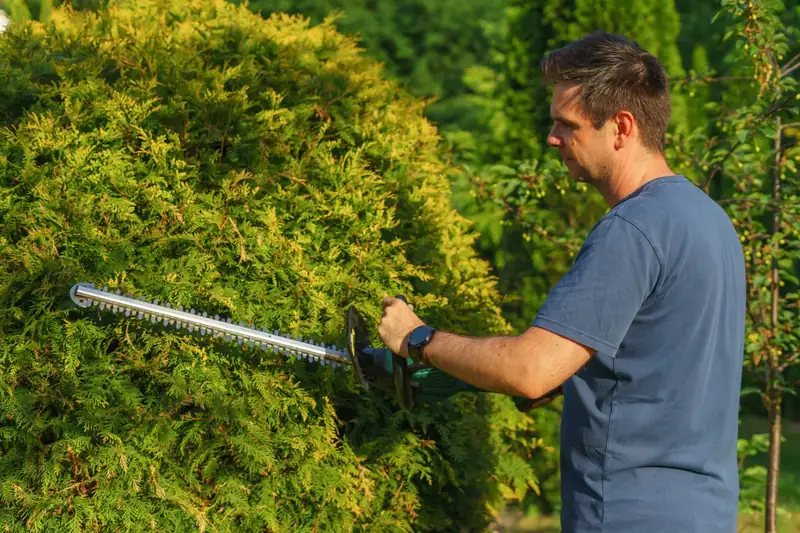
The short answer: trim most Melbourne hedges twice a year, in spring and again in autumn. Fast growers need light tidies in between. Trim flowering hedges straight after they flower, and hold off in a heatwave, in frosty weather for tender plants, and wherever birds are nesting.
Here’s how to time each cut, and what to do when a hedge has got away from you.
The two main trims: spring and autumn
Gardening Australia’s hedge advice is to prune ongoing growth in autumn and again in spring. In Melbourne that usually means:
- Spring (September to November): the main shaping trim, as the new season’s growth gets going.
- Autumn (March to May): a second trim to tidy up summer’s growth before the cooler months.
Before a spring trim, look closely for flower buds. Gardening Australia suggests checking that none are forming before you cut, or this season’s flowers end up in the green bin.
Native hedges such as westringia and grevillea suit an autumn tip prune. Gardening Australia’s native pruning segment gives a window of autumn “until the end of April” for these plants.
How often fast growers need a tidy
Two trims a year suits most established hedges. Fast growers need more. For a young hedge, Gardening Australia’s “Hedge Fun” segment suggests a trim every three to four months in its second year, or twice a year for slow growers.
How fast is fast? Gardening Australia notes that Pittosporum tenuifolium can grow about a metre a year. The owner of a Dandenong Ranges garden with around 50 hedges told the show that fast growers such as pittosporum are hard work.
Regular light trims are easier to live with than one big catch-up cut. Each visit takes off only the new growth, so there’s less green waste each time and the hedge keeps its shape. If keeping up is the hard part, regular hedge trimming on a schedule agreed with you takes it off your list.
Prefer to talk? Call or text 0415 386 399. We reply within 12 business hours.
Flowering hedges: trim after they flower
Trim a flowering hedge at the wrong time and you cut off the flowers. Gardening Australia’s spring pruning segment suggests trimming spring-flowering hedges such as laurustinus (Viburnum tinus) and photinia straight after they finish flowering. Taking off the spent flowers then also encourages thick, bushy growth.
The same thinking works for other flowering hedges: find out when yours flowers, and trim once the flowers are done. Camellia sasanqua, for example, flowers each autumn, so a routine autumn trim would cut off its buds.
When to hold off
Trimming for a dense, even hedge
A hedge looks best when it’s full right down to the ground. These tips come from Gardening Australia’s hedge segments:
Overgrown hedges: cutting back hard
Whether a hedge can be cut back hard depends on the plant.
A severe cut can expose bare wood or set a plant back for a long time. If you’re not sure what your hedge will take, get advice before anyone takes a big cut.
Noise hours and neighbours
EPA Victoria sets the times you can’t use noisy equipment at home. Mowers, petrol tools, electric power tools and other electric garden tools share the same hours. Don’t use them:
- on weekdays before 7 am or after 8 pm
- on weekends and public holidays before 9 am or after 8 pm.
Noise complaints about homes go to your local council, not the EPA.
If a hedge hangs over a fence, Victoria Legal Aid says property owners are responsible for branches that overhang a neighbour’s fence. It suggests talking with your neighbour before anything is cut. If you can’t agree, the Dispute Settlement Centre of Victoria can help.
Booking a trim
We offer hedge trimming across Melbourne. We agree the height and shape with you before any cutting starts, and your written quote says how the clippings are handled. If a hedge needs specialist tree work, we’ll tell you rather than treat it as ordinary trimming.
Want trims to happen without you thinking about them? A regular visit can cover hedges along with the lawn and garden beds: see garden maintenance across Melbourne and what garden maintenance includes. For the pile left after a big cut, there’s green waste removal.
Planting a new hedge? Read the best hedge plants for Melbourne, and if the whole front garden needs a rethink, see front yard landscaping ideas for Melbourne.
Text a photo of your hedge and your suburb to 0415 386 399 for a free quote.
From EKO Gardening Solutions. Sources checked on 9 October 2026.
A few useful answers.
Have a question about your own space?
Tell us what you have in mind.
What month should I trim my hedge in Melbourne?
Most hedges get their main trims in spring (September to November) and again in autumn (March to May). Trim flowering hedges straight after they finish flowering, and check for nesting birds before a spring trim.
Can I trim my hedge in summer?
A light tidy is fine for most hedges, and fast growers often need one. Skip the hottest days. If leaves get scorched in a heatwave, leave them on until the hot weather has passed, because they shade the growth below.
How often does a hedge need trimming?
Twice a year, in spring and autumn, suits most established hedges. Fast growers need tidying more often. For a young hedge, Gardening Australia suggests a trim every three to four months in its second year.
Can an overgrown hedge be cut back hard?
Some can. Many natives and lilly pillies regrow from a hard cut, but most conifers don’t resprout from old wood. Big reductions are safest done in stages over a few years.
Sources
- Gardening Australia: Growing Hedges (aired 30 Jun 2007, updated Nov 2018; checked 9 Oct 2026)
- Gardening Australia: Hedge Fun (28 Apr 2023; checked 9 Oct 2026)
- Gardening Australia: Spring Pruning (28 Sep 2018; checked 9 Oct 2026)
- Gardening Australia: Living on a Hedge, fast growers, formal trimming and a staged renovation (12 Jun 2020; checked 9 Oct 2026)
- Gardening Australia: Pruning Natives (19 Mar 2016; checked 9 Oct 2026)
- Gardening Australia: Pruning Lilly Pillies (27 Sep 2008; checked 9 Oct 2026)
- Gardening Australia: FAQs, pruning conifers (9 May 2025; checked 9 Oct 2026)
- Gardening Australia: Heatwave Affected Plants (6 Feb 2010; checked 9 Oct 2026)
- Victorian Government: Authority to Control Wildlife application guide, protected wildlife and nests (updated 22 Apr 2026; checked 9 Oct 2026)
- Victorian Government, DEECA (wildlife.vic.gov.au): swooping birds and the spring breeding season (updated 21 Aug 2026; checked 9 Oct 2026)
- EPA Victoria: residential noise, prohibited times for mowers and garden power tools (updated 23 May 2025; checked 9 Oct 2026)
- Victoria Legal Aid: fences and trees, overhanging branches (updated 16 Sep 2025; checked 9 Oct 2026)
Keep reading.



Ready to make a start?
Tell us about your space.
We’ll help you work out the next step.