
How much mulch do you need?
Measure, choose a depth, multiply. Here’s the quick maths, a ready-made table, and how to avoid buying a trailer load too many.
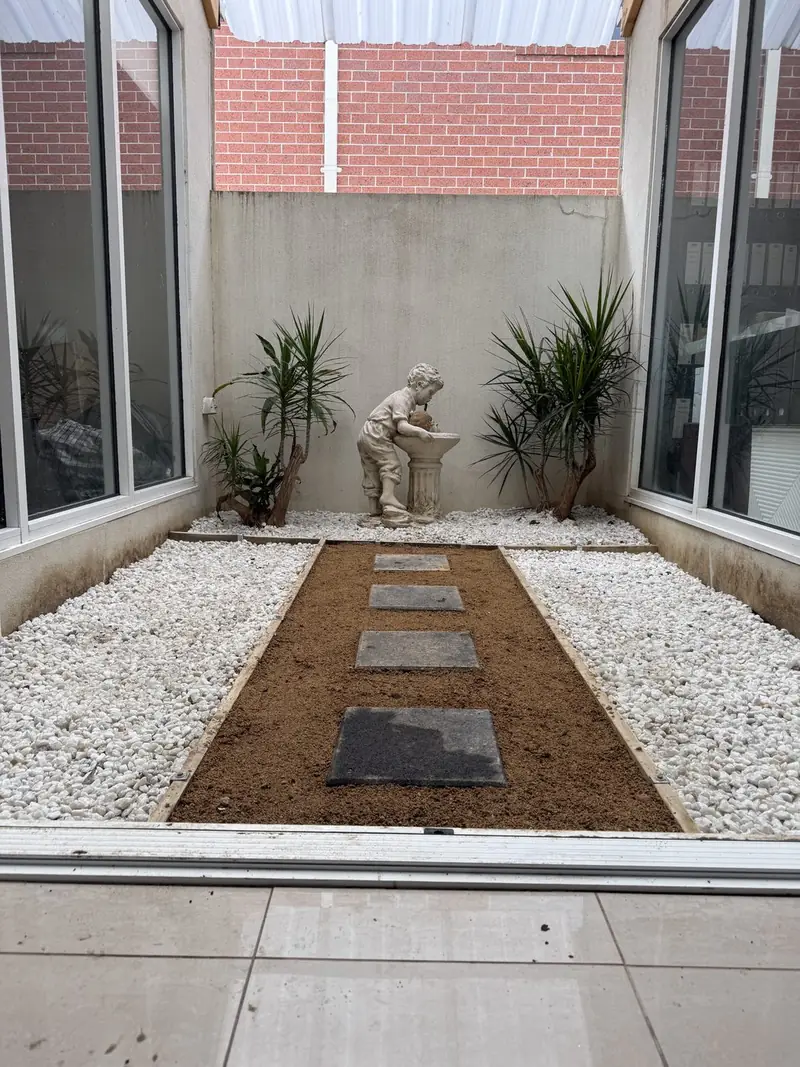
The short answer: multiply the area of your garden beds in square metres by the depth you want in metres. The answer is the cubic metres of mulch to order. For example, 10 m² of beds at 75 mm deep is 10 × 0.075 = 0.75 m³. At the usual depth for chunky mulch, 50 to 75 mm, one cubic metre covers about 13 to 20 m².
Three steps get you there: measure, choose a depth, multiply. If you’d rather skip the maths, we measure and mulch garden beds across Melbourne.
Step 1: measure your beds
Measure in metres, and work out each bed separately.
- Rectangles: length × width. A bed 4 m long and 1.5 m wide is 6 m².
- Circles: 3.14 × radius × radius, where the radius is half the width. A round bed 2 m across is 3.14 × 1 × 1, about 3.1 m².
- Triangles: half the base × the height.
- Odd shapes: split them into rectangles and triangles, work out each piece and add them up.
Add the beds together, then allow a little extra for curves and uneven ground. When ordering turf, Gardening Australia’s turf expert adds 5% for edges, corners and curves. You can use the same allowance for mulch.
Leave out the strip you’ll keep clear along the house. Victoria’s building regulator says not to build up garden beds and mulch against walls, because it gives termites a hidden way in.
Step 2: choose a depth
The sources don’t all agree, but they cluster around 50 to 100 mm:
- Chunky organic mulch such as bark or wood chip: Sustainable Gardening Australia says up to 60 to 75 mm.
- The 50 mm view: Gardening Australia reports research suggesting 50 mm is adequate, and it lets moisture into the soil better than the traditional 100 mm.
- Fine mulch: keep it thin. Sustainable Gardening Australia warns against a thick layer of fine mulch.
- Council booklets: Darebin’s and Moonee Valley’s sustainable gardening booklets top mulch up to 8 to 10 cm, while Whittlesea’s suggests 2.5 to 7.5 cm.
- Council landscape guidelines: Hume City Council’s guidelines set 75 to 100 mm in garden beds, for both organic mulch and stone (inorganic) mulch.
For most home garden beds, 50 to 75 mm of chunky mulch is a sensible middle ground.
Prefer to talk? Call or text 0415 386 399. We reply within 12 business hours.
Step 3: multiply
Here’s the maths done for you. Each figure is the cubic metres (m³) of mulch needed.
Bed area At 50 mm deep At 75 mm deep At 100 mm deep 5 m² 0.25 m³ 0.38 m³ 0.5 m³ 10 m² 0.5 m³ 0.75 m³ 1 m³ 20 m² 1 m³ 1.5 m³ 2 m³ 50 m² 2.5 m³ 3.75 m³ 5 m³ For any other size, convert the depth to metres (75 mm is 0.075 m) and multiply it by the area. Round up to the amount your supplier sells.
A worked example. Take the two beds from step 1 (6 m² and about 3.1 m²) plus a third bed of 4 m². That’s 13.1 m². Add 5% for curves and you have about 13.8 m². At 75 mm deep: 13.8 × 0.075 = 1.03 m³, so order just over one cubic metre.
What one cubic metre covers
Flip the sum around and you get coverage. One cubic metre of mulch covers:
Topping up? You don’t need the full depth again. Measure how deep the old mulch is, take that from the depth you want, and multiply the difference by the area. Darebin’s and Moonee Valley’s booklets suggest checking mulch levels once a year, because organic mulch breaks down as it feeds the soil.
Pebbles and gravel
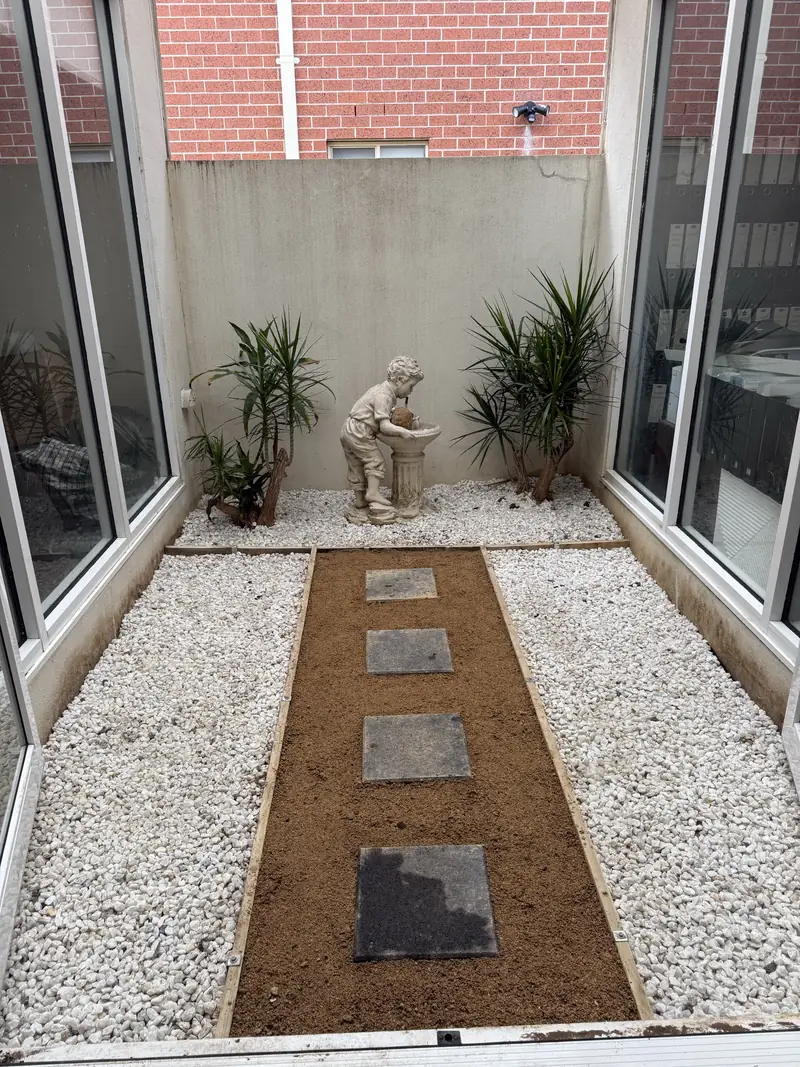
The maths is the same, but stone is much heavier to move. At 75 to 100 mm, the depth in Hume’s guidelines, one cubic metre covers 10 to 13 m². Stone is often sold by the tonne, and the weight of a cubic metre depends on the stone. Ask your supplier to convert your cubic metres before you order.
A firm edge, such as timber or steel, keeps pebbles where they belong.
The downsides of stone
Before you choose stone, weigh up the downsides Sustainable Gardening Australia lists:
To compare stone with bark, wood chip and straw, read the best mulch for Melbourne gardens.
Bags or bulk?
Bags suit small beds and top-ups. Bagged mulch is sold in litres, and 1,000 litres is one cubic metre:
| Bag size | Bags per cubic metre (rounded up) |
|---|---|
| 25 litres | 40 |
| 50 litres | 20 |
| 60 litres | 17 |
| 70 litres | 15 |
Bulk suits bigger jobs. It’s sold by the cubic metre, delivered or collected by trailer. How much fits in a trailer depends on the trailer and the mulch, so ask the supplier rather than guessing. Have bulk mulch tipped where you can barrow it to the beds, and keep driveways and paths clear.
Getting it measured and spread
Before any mulch goes down, pull the weeds and moisten the soil: Sustainable Gardening Australia lists both as first steps. Not sure what’s growing? See common weeds in Melbourne. Hume’s guidelines also keep mulch away from the trunks of trees and shrubs, so stems don’t rot.
If you’d rather not barrow it yourself, we offer mulch installation across Melbourne. We measure the beds, weed and prepare them, spread the mulch to an even depth, keep it clear of stems and walls, and leave the site tidy. If the beds are overgrown, a garden cleanup clears them first. Mulched beds are also one of the easiest low-maintenance garden ideas for Melbourne.
Text a few photos of your garden beds and your suburb to 0415 386 399 for a free measure and quote.
From EKO Gardening Solutions. Sources checked on 9 October 2026.
A few useful answers.
Have a question about your own space?
Tell us what you have in mind.
How much area does a cubic metre of mulch cover?
About 20 square metres at 50 mm deep, about 13 square metres at 75 mm, and 10 square metres at 100 mm. Divide 1 by the depth in metres to get the area for any depth.
How many bags of mulch make a cubic metre?
Bagged mulch is sold in litres, and 1,000 litres is one cubic metre. That’s 20 bags of 50 litres, or about 17 bags of 60 litres. Check the litres printed on the bag you’re buying.
How thick should mulch be to stop weeds?
Mulch suppresses weeds rather than stopping them. Pull the weeds first, then lay chunky mulch about 50 to 75 mm deep. Sustainable Gardening Australia warns against a thick layer of fine mulch. Pull any weeds that come through while they’re small.
How much mulch do I need to top up?
Measure how deep the old mulch is, take that from the depth you want, and multiply the difference by the bed area. Darebin’s and Moonee Valley’s sustainable gardening booklets suggest checking mulch once a year.
Sources
- Sustainable Gardening Australia: choosing mulch for your garden, depths, preparation and the downsides of stone (28 Sep 2017; checked 9 Oct 2026)
- Gardening Australia: Choosing Mulch, 100 mm versus 50 mm (aired 22 Oct 2011; checked 9 Oct 2026)
- City of Darebin and Sustainable Gardening Australia: Sustainable Gardening in Darebin, mulch top-ups (2011, PDF; checked 9 Oct 2026)
- Moonee Valley City Council and Sustainable Gardening Australia: Sustainable Gardening in Moonee Valley, mulch levels (PDF, undated; checked 9 Oct 2026)
- City of Whittlesea and Sustainable Gardening Australia: Sustainable Gardening in the City of Whittlesea, mulch depth (2006, PDF; checked 9 Oct 2026)
- Hume City Council: landscape guidelines, mulch (75 to 100 mm organic or inorganic in garden beds; kept off trunks) (PDF, undated; checked 9 Oct 2026)
- Building and Plumbing Commission (Victoria): termites, garden beds and mulch against walls (modified 11 Aug 2026; checked 9 Oct 2026)
- Gardening Australia: Laying Down the Lawn, adding 5% for edges and curves (14 Oct 2022; checked 9 Oct 2026)
Keep reading.

Ready to make a start?
Tell us about your space.
We’ll help you work out the next step.