Does artificial grass get hot?

Yes, and it’s worth knowing how hot before you buy. Here’s what researchers measured, what Melbourne summers bring, and what actually keeps turf cooler.

Updated 8 October 2026

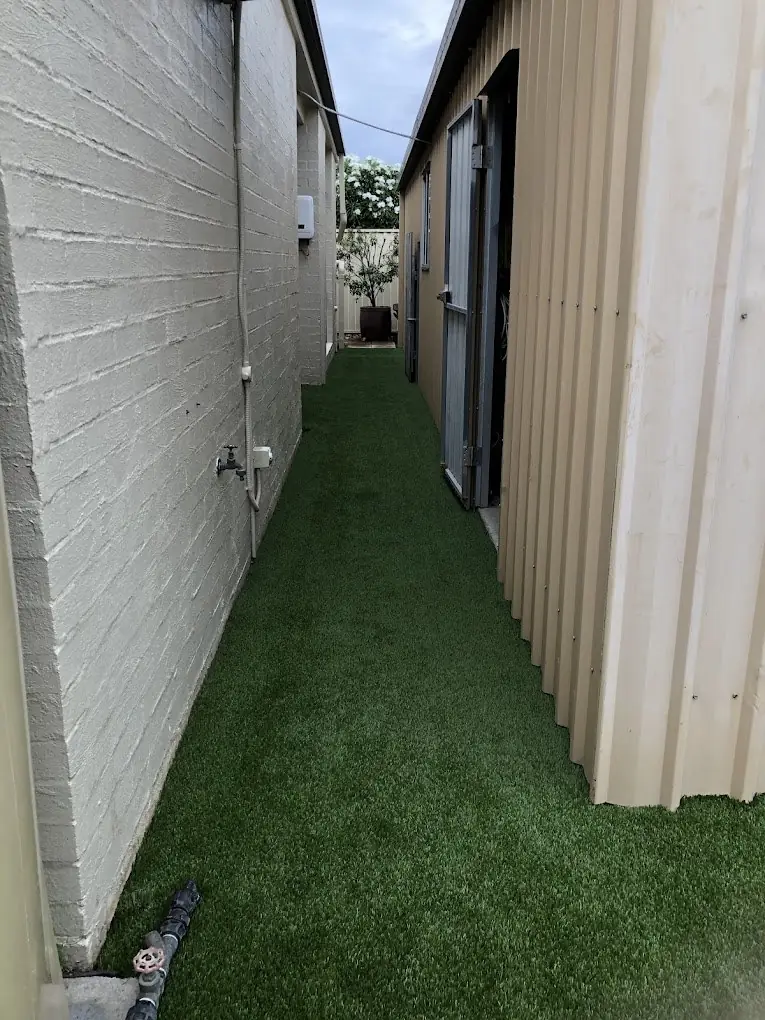
Close-up of green grass in sunlight (stock photo)

The short answer: yes. In full summer sun, artificial grass gets much hotter than natural grass. In a Western Sydney University study, synthetic turf in a home’s front yard reached 53°C on a 36°C day, while green natural grass in a nearby park averaged 34°C. Shade helps most, and hosing it down only cools it for a short time.

Heat is a common worry about turf, and a fair one. Here’s what the research shows, and what you can do about it.

What the measurements show

Researchers at Western Sydney University measured surface temperatures around western Sydney, and reviewed 20 earlier studies, in a report prepared for the NSW Chief Scientist & Engineer. These are some of their findings:

Where and when Air temperature What they measured
A home’s front yard and a nearby park, late afternoon, 1 March 2021 36°C maximum Synthetic turf in the front yard 53°C, the same as black-painted concrete. In the park: dry natural grass 42°C, green natural grass 34°C on average
A school, sun versus a building’s shade, 19 December 2019 43°C Synthetic turf 61°C in sun, 35°C in shade
A blade-length test 34°C The longest-bladed sample (40 mm) reached 84.5°C: about 4°C hotter than 30 mm blades and 10°C hotter than the shortest (13 mm)
A review of 20 published studies Sunny days Hottest synthetic turf readings of 53°C to 93°C, and 14°C to 64°C hotter than natural grass in the same studies

Apart from the front yard, most of these readings come from schools, sports fields and playgrounds rather than home lawns, but the reason is the same. Living grass holds moisture and cools itself, and plastic fibres in full sun don’t. The NSW Chief Scientist & Engineer’s review also noted that surfaces can get very hot, and uncomfortable to be on, even on days below 30°C.

How hot does Melbourne get?

Melbourne’s summers are milder on average than western Sydney’s, but they still bring hot days. At the Bureau of Meteorology’s Melbourne Airport station, records from 1970 to 2026 show:

  • January’s average maximum is 26.7°C
  • around 33 days a year reach 30°C or more
  • about 10 days a year reach 35°C or more
  • 1 or 2 days a year reach 40°C or more, and the record is 46.8°C on 7 February 2009

So most summer days are cooler than the study days above, but a typical summer still brings a run of days when sunny turf gets uncomfortably hot for bare feet and paws.

What actually helps

Shade

The researchers called shade the most efficient way to cool outdoor surfaces. At the school site, the shade of a building kept synthetic turf at 35°C while turf in the sun reached 61°C. Trees, shade sails, pergolas and the house’s own afternoon shadow all count. Plan shade over the parts of the lawn you use most on summer afternoons.
Product choice

Shorter blades ran cooler than longer ones in the blade-length test. The same report noted that turf without infill can get about as hot as turf with it, which points to the plastic fibres themselves as a big part of the heat. Studies of lighter-coloured fibres and infill found some cooling, but the evidence is limited.

Be careful with turf sold as “cool”. Ask for independent test results, not just the maker’s own figures. The NSW review also noted that technologies which reflect more sunlight may increase heat stress for people using the surface, because more of the sun’s energy bounces back onto them.

Watering

Hosing turf down cools it, but not for long. The researchers found synthetic turf warmed back up to its earlier temperature a short time after watering, and the NSW review noted that extra watering may raise humidity and make it feel worse. If you do hose it, Victoria’s permanent water saving rules require a trigger nozzle on any hose.

Timing

On hot days, use the lawn in the morning and evening, and keep the middle of the day for the shade.

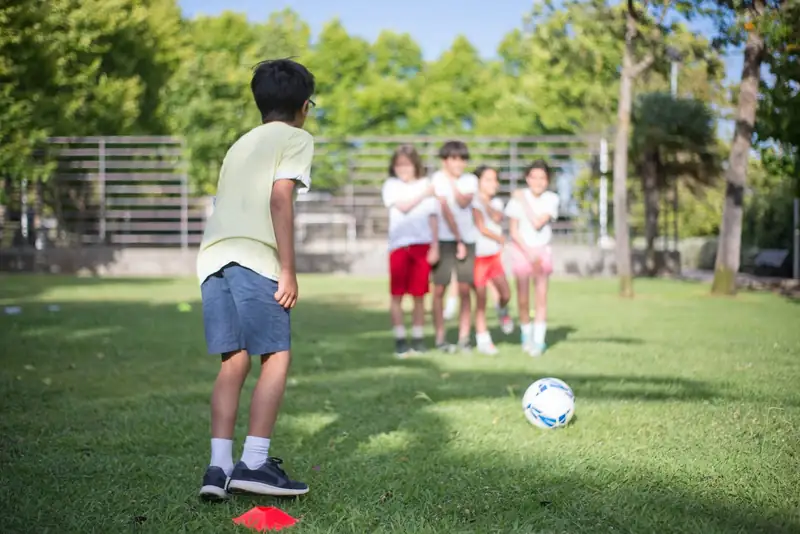
Kids playing soccer on a lawn (stock photo)

Kids, pets and bare feet

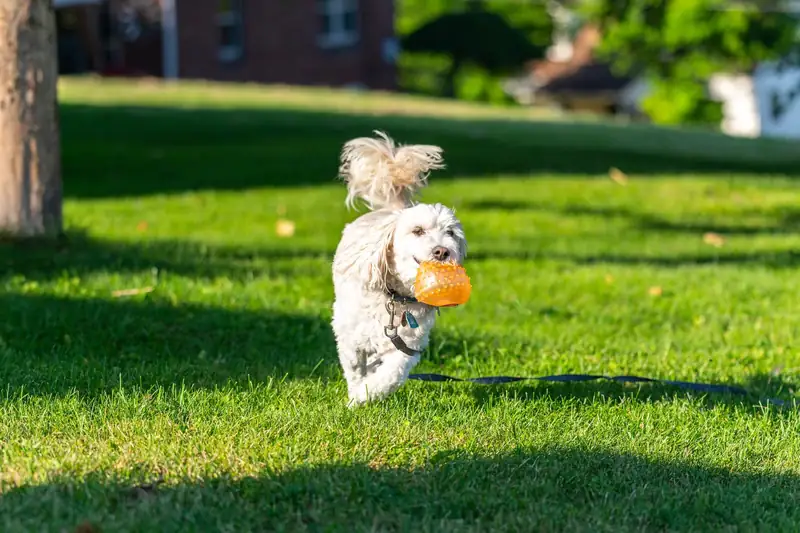
RSPCA Australia’s test for pavements is a good one for turf too. If you can’t hold the back of your hand on the surface for more than a few seconds, it’s too hot for paws, and probably for little feet. On hot days, give pets shade and water, and walk or play with dogs early or late. Planning turf for a dog? Ask us about pet-friendly artificial grass, including shade and drainage, when we quote.

When to think twice

Artificial grass may not be the right choice if:

  • the area is in full sun all afternoon, with no way to add shade
  • it’s mainly for kids or dogs to use on summer afternoons
  • a cool surface underfoot is your top priority

In those yards a natural lawn, or a mix of turf in the shady spots and natural lawn in the sun, may suit you better. Our artificial grass vs natural lawn guide compares them side by side.

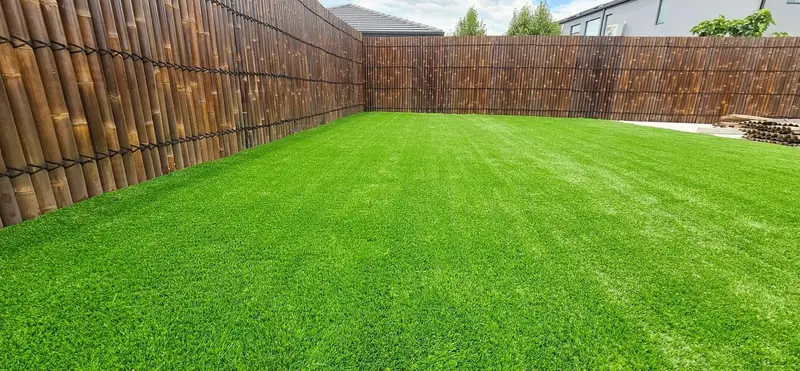
Artificial grass beside bamboo screening

How we approach heat

When we quote, we talk through how much sun the area gets and how you’ll use it, and we can compare turf samples with you before you choose. See how we build every job on our artificial grass installation page.

From EKO Gardening Solutions. Sources checked on 8 October 2026.

A few useful answers.

Have a question about your own space?
Tell us what you have in mind.

How hot does artificial grass get in summer?

In full sun it can get far hotter than the air. In a Western Sydney University study, turf in a home’s front yard reached 53°C on a 36°C day, and across 20 published studies the hottest readings ranged from 53°C to 93°C.

Is there artificial grass that doesn't get hot?

All artificial grass heats up in the sun. Some products are marketed as cooler, so ask for independent test results, and remember that the researchers rated shade as the most efficient way to cool a surface.

Does watering artificial grass cool it down?

Only briefly. Researchers found synthetic turf warmed back up to its earlier temperature a short time after it was watered.

Is artificial grass too hot for dogs?

It can be on hot, sunny days. Give dogs shade and water, and keep play to cooler parts of the day. RSPCA Australia’s hand test helps: if you can’t hold the back of your hand on a surface for more than a few seconds, it’s too hot for paws.

Sources

  1. Western Sydney University (Pfautsch and Wujeska-Klause, Aug 2022): Synthetic Turf in Public Spaces, surface temperatures
  2. NSW Chief Scientist & Engineer (Oct 2022): Synthetic Turf Review final report
  3. Bureau of Meteorology: climate statistics, Melbourne Airport (1970–2026)
  4. RSPCA Australia (13 Dec 2024): Five ways to keep your animals safe on hot days
  5. Victorian Government: permanent water saving rules

Let’s make more of your garden.

Tell us about your space.
We’ll help you work out the next step.