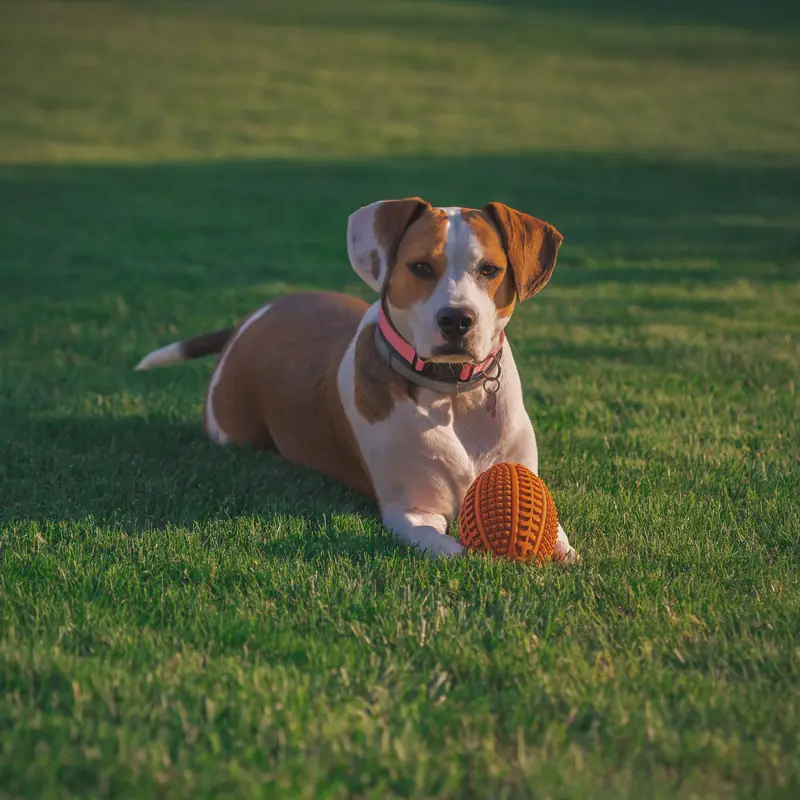
Pet-friendly artificial grass · Melbourne
Artificial grass for dogs, done properly.
- 5.0 on Google · 8 reviews
- Insured · ABN registered
- We reply within 12 business hours
Thinking about pet-friendly artificial grass in Melbourne? Here’s how we set turf up for dogs, and the honest trade-offs: drainage, cleaning, summer heat and digging.
- Your weekends, without mowing
- More room to enjoy your yard
- No surprise fees
Dogs and artificial grass can get along well: no muddy paws, no worn-out patches and no dead spots from wee. But it only works if the turf is set up for a dog, and if you’re happy with a simple cleaning routine. Here’s what matters, and the trade-offs worth knowing before you decide.
Ready for a free quote?
Tell us your suburb, roughly how big the area is and send a few photos.
What makes artificial grass pet-friendly
Mostly, it’s what’s underneath. A pet-friendly install has:
The setup to avoid with dogs is turf laid straight onto soil or old lawn. The ground underneath stays damp, holds smells and settles unevenly.
Drainage for dog wee
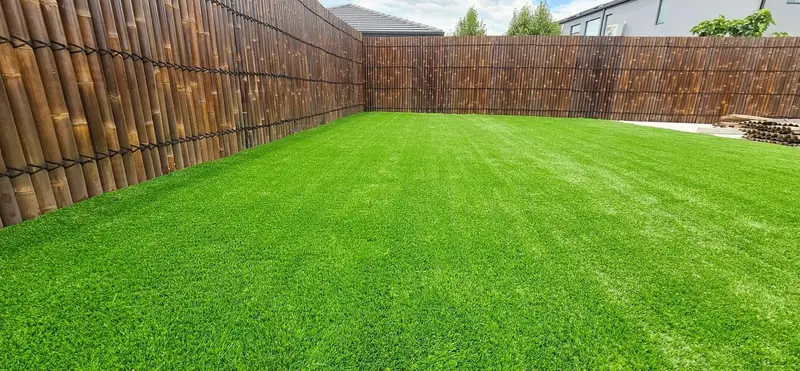
Urine has to go somewhere. On a well-built install it passes through the turf backing, into the compacted base and away. Problems start when it can’t: a flat or dished base, heavy ground that won’t drain, or a spot your dog uses every day that never gets rinsed.
When we quote a pet area, we look at where your dog actually goes, where water sits after rain, and whether the levels need adjusting before the turf goes down.
A simple cleaning routine
You don’t need special gear. A routine that suits most dog owners:
Victoria’s permanent water saving rules require a trigger nozzle on any hose, so spot-rinse with a trigger nozzle or a bucket rather than leaving a hose running. Our guide to cleaning artificial grass covers stains, leaves and seasonal care.
Odour-control infill
Infill is the fine material brushed down into the turf fibres. Some infills are sold specifically to help with pet smells.
We don’t push a particular infill. If you’d like one for your dog’s area, we’ll talk through the options with you before you choose.
Be wary of products sold as “odour-free” or “pet-safe”. No infill replaces picking up and rinsing, and any claim like that should come with the maker’s product information. Ask to see it. We’re happy to share what our suppliers provide.
Heat, shade and water for dogs
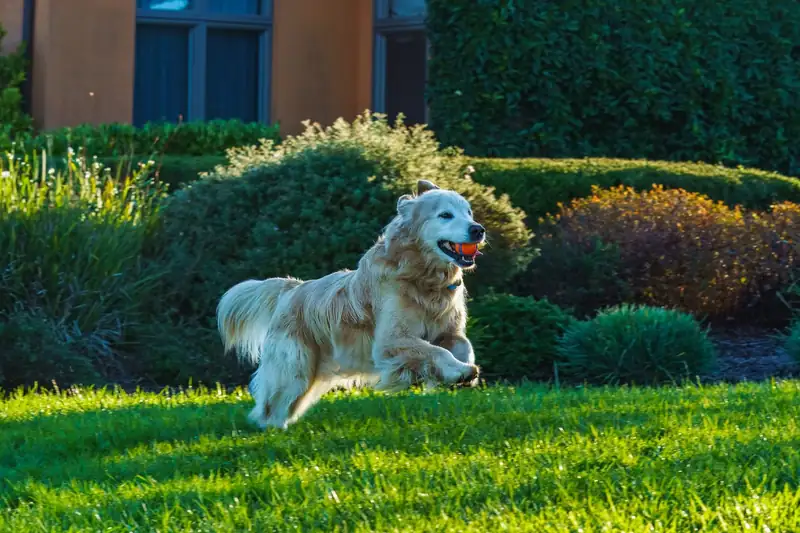
Artificial grass heats up in the sun far more than natural grass. In a Western Sydney University study, synthetic turf in a home’s front yard reached 53°C in full sun on a 36°C day, while green natural grass in a nearby park averaged 34°C. Shade helps most: in the same research, the shade of a building kept synthetic turf at a school at 35°C while turf in the sun reached 61°C, on a 43°C day.
For dogs, that means:
Hosing turf down cools it only briefly, so don’t rely on that. Our guide to whether artificial grass gets hot has the full research.
Diggers, chewers and edges
Diggers usually go for weak points: an edge that’s lifting, a join that’s opened up, or a corner by the fence. So we finish edges against firm edging, pin and fix edges and joins down, and tuck the turf in tight at fences and garden beds.
If your dog chews, supervise them on new turf and fix any loose fibre or edge quickly. A puppy in a chewing phase is better kept off until the habit passes.
What to avoid
Is artificial grass safe for my dog?
We can’t promise any turf is safe for every dog, and you should be wary of anyone who does. It depends on the product, the heat, how your dog uses it and how it’s cleaned. Ask for the product information, plan for shade and water, and talk to your vet if your dog has allergies or skin problems.
For everything else about our turf, from the base we build to choosing the turf, see artificial grass installation in Melbourne. Your free written quote sets out the cost of pet-friendly artificial grass for your yard.
A clear path to getting it done.
- 01
Show us your space
Share your suburb, roughly how big the area is and a few photos.
- 02
Free measure & quote
We look at the ground, access and levels, then give you a written quote.
- 03
Agree the work
Know the work and price before you commit. Changes are agreed with you first.
- 04
Enjoy the result
We complete the work, tidy up and explain any ongoing care.
A few useful answers.
Have a question about your own space?
Tell us what you have in mind.
Is artificial grass good for dogs?
It can be, if the base drains well, the turf suits heavy use and you’re happy to pick up and rinse regularly. It ends mud and dead patches, but it gets hot in summer sun, so plan for shade and water.
Does artificial grass smell with dogs?
It can if wee can’t drain away or favourite spots aren’t rinsed. A free-draining base, regular rinsing and an occasional wash with a cleaner made for synthetic turf keep smells down.
What's the best artificial grass for dogs?
Usually a shorter, dense pile of around 20–30 mm with good drainage. It’s easier to pick up after and rinse, and it handles traffic well. We can compare samples with you before you choose.
How do I get dog wee smell out of artificial grass?
Start with a good rinse. If it still smells, use a cleaner made for synthetic turf and follow its label and the turf maker’s care guide. A smell that keeps returning to one spot can mean the base underneath isn’t draining, and cleaning alone won’t fix that. Our guide to cleaning artificial grass has a full routine.
Can dogs dig up artificial grass?
Diggers tend to go for weak points such as a lifting edge or an open join. Firm edging and well-fixed edges and joins make that much harder. Supervise diggers on new turf and fix any loose spot early.
Does artificial grass get too hot for dogs' paws?
It can on hot, sunny days, because synthetic turf in full sun gets much hotter than natural grass. Give dogs shade and water, and keep play to cooler parts of the day. Use the hand test too: if you can’t keep the back of your hand on it for a few seconds, it’s too hot.
Can I use bleach on artificial grass?
Not without checking the turf maker’s care guide first. Use a cleaner made for synthetic turf, follow the label and rinse well.
Keep reading.
Ready to make a start?
Tell us about your space.
We’ll help you work out the next step.