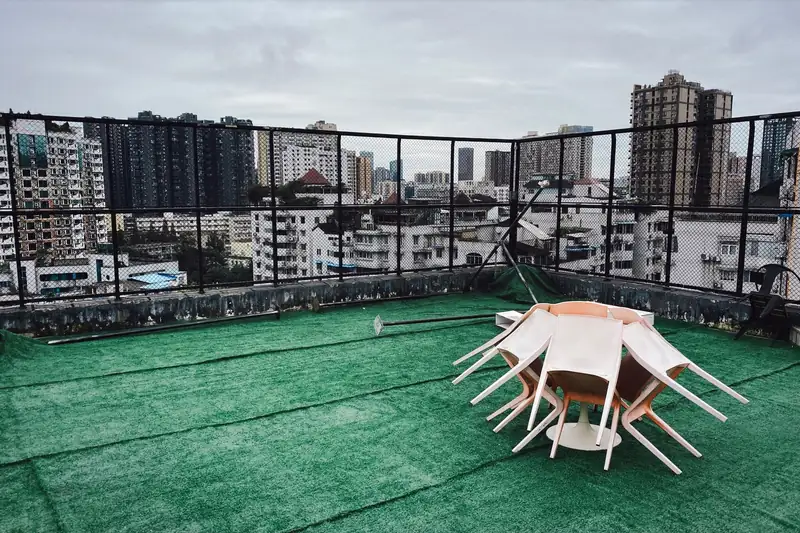
Artificial grass over concrete & pavers · Melbourne
Artificial grass over concrete, laid properly.
- 5.0 on Google · 8 reviews
- Insured · ABN registered
- We reply within 12 business hours
Got a tired concrete slab or old pavers? We install artificial grass over sound, well-drained surfaces across Melbourne. Here’s what’s involved and how to get a quote.
- Your weekends, without mowing
- More room to enjoy your yard
- No surprise fees
A tired-looking slab, a dated paved courtyard or a bare concrete yard can all become a green space without jackhammering everything out, as long as the surface underneath is sound. We check that first, then lay the turf so water can get away and the edges stay down.
Want to know whether turf on concrete can work at all, and how? Read our guide to laying artificial grass on concrete or pavers. This page is about getting it done.
Ready for a free quote?
Tell us your suburb, roughly how big the area is and send a few photos.
What we check before quoting
If the surface isn’t suitable, we’ll say so, and quote a standard install with the old surface removed and a compacted base built in its place if that’s the better option.
How we lay artificial grass over concrete
- Clean and prepare. Sweep, remove weeds and moss, and fix any problem areas.
- Sort the drainage. Make sure water can run off the slab, and deal with any low spots before the turf goes down.
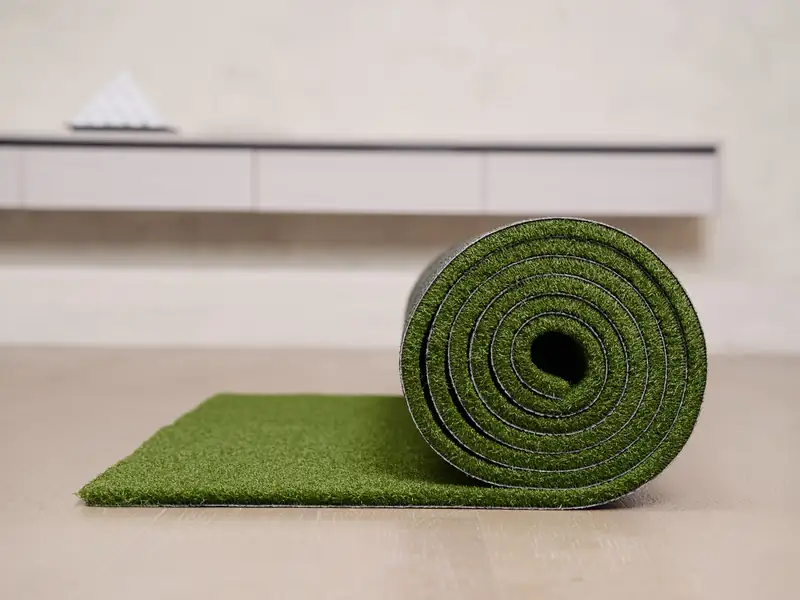
- Lay an underlay, where the job needs one. A foam underlay softens the feel and hides small joints and texture in the surface.
- Lay and join the turf. Fibres all leaning the same way, joins tight and hard to spot.
- Fix the edges. Edges and joins are glued, or fixed to a solid edge, because pins can’t go into concrete.
- Finish and clean up. Infill if the product calls for it, then a clean-up and care tips.
What it’s good for
Keep in mind that turf on concrete feels firmer than turf on a crushed-rock base, and both concrete and turf heat up in summer sun. In a Western Sydney University study, sunlit synthetic turf in a home’s front yard reached 53°C on a 36°C day, the same as black-painted concrete in that yard.
What affects the price
Laying over sound concrete saves digging and base material, but other costs come in: surface repairs, drainage work, underlay, adhesive and edging. Access and the turf you choose matter too. Your written quote spells out the scope, so you can compare artificial grass costs like for like.
Getting a quote
Send us:
For everything else about how we work, see artificial grass installation in Melbourne.
Want a price for your yard?
A clear path to getting it done.
- 01
Show us your space
Share your suburb, roughly how big the area is and a few photos.
- 02
Free measure & quote
We look at the ground, access and levels, then give you a written quote.
- 03
Agree the work
Know the work and price before you commit. Changes are agreed with you first.
- 04
Enjoy the result
We complete the work, tidy up and explain any ongoing care.
A few useful answers.
Have a question about your own space?
Tell us what you have in mind.
Will you tell me if my concrete isn't suitable?
Yes. If the slab is cracked, moving or holds water, we’ll tell you what it needs first, or whether a standard dug-out install would give you a better result.
Do you lay turf over pavers as well as concrete?
Yes, as long as the pavers are firmly bedded and the surface drains. Loose or sinking pavers need re-bedding first.
How is the turf held down on concrete?
Pins can’t go into concrete, so we glue the edges and joins, or fix the turf to a solid edge.
Keep reading.
Ready to make a start?
Tell us about your space.
We’ll help you work out the next step.